If you truly want to understand Central Asia, you must look beyond the grasslands and mosques — and step inside this museum.
It feels like a “pasture of time,” quietly preserving the soul of Kazakhstan from the Bronze Age to the modern republic. More than a national museum, it represents the cultural core of Central Asia and fills a crucial gap on the global museum map: the civilization of the Eurasian Steppe.
A Museum Worth Being Seen
While compiling material for my book Dating the Earth: 100 Museums to Visit in a Lifetime, I hesitated before including the Central State Museum of Kazakhstan.
Kazakhstan is not yet a mainstream travel destination. Many people cannot immediately locate it on a map. But perhaps that is precisely why it deserves attention. Travel is not only about visiting famous places — it is about rediscovering the overlooked corners of the world.
Located in the heart of Almaty, the Central State Museum of Kazakhstan is the largest and most representative history museum in Central Asia. It can almost be seen as a condensed version of the region’s entire civilization.
Here you will encounter:
-
Nomadic steppe culture
-
The Scythians and Saka tribes
-
The Turkic empires
-
The Silk Road’s exchanges between China, Persia, Arabia, and Europe
On the “global museum map,” this institution is a vital cultural bridge across Eurasia — often described as the “British Museum of Central Asia.”
It is a key stop for understanding how the Silk Road shaped the Eurasian continent — giving it not only regional significance, but global importance.
Unlike Europe’s polished art palaces, this museum conveys something raw and elemental — a sense of historical gravity. When you stand before handcrafted gold ornaments, leather armor, and ancient saddles, you begin to grasp the strength and beauty of steppe civilization.
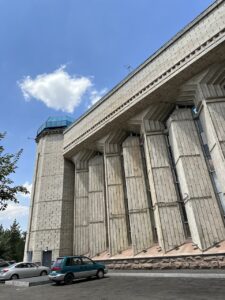
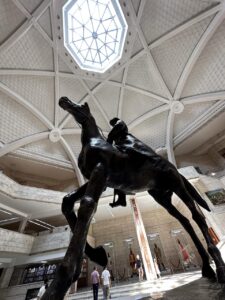
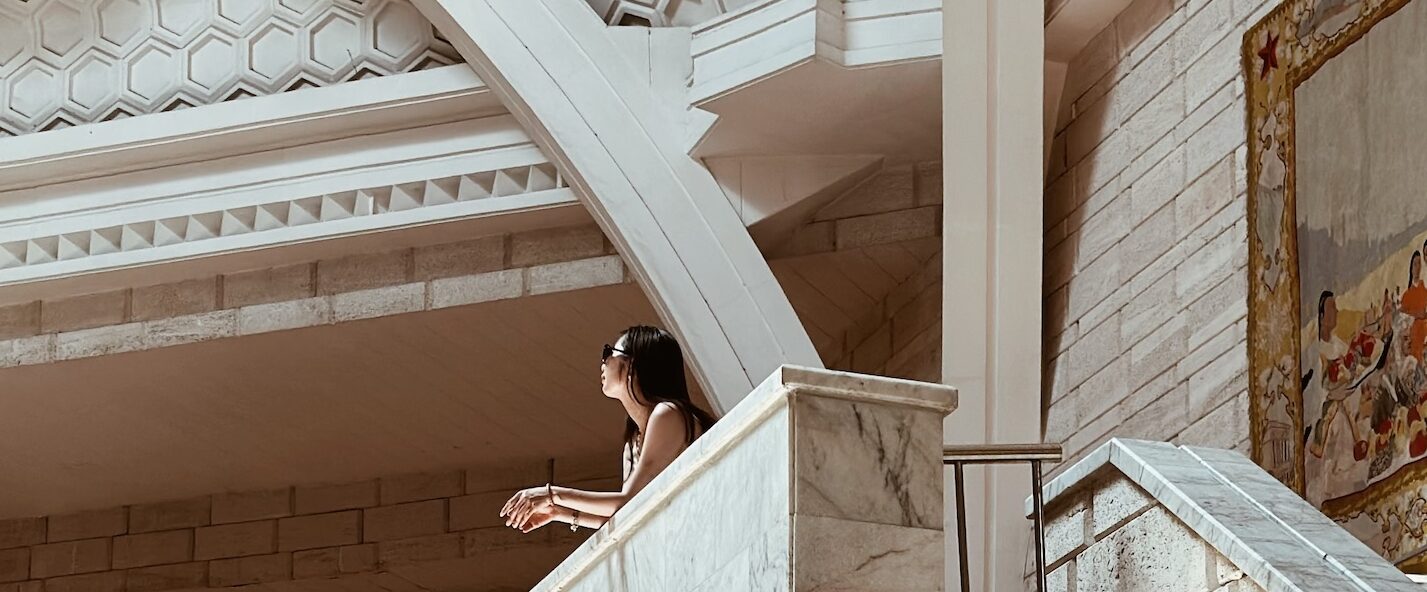
Founded in 1931, the current building was completed in 1985. Its grand, symmetrical façade blends Soviet-era monumental aesthetics with symbolic motifs drawn from steppe heritage.
Outside, monuments and sculptures representing national identity rise proudly in the square. Golden decorative elements shimmer in the sunlight, giving the entire complex a striking presence.
The museum contains seven exhibition halls, covering:
-
Natural history
-
Archaeology
-
Ethnography
-
Religion
-
Modern political history
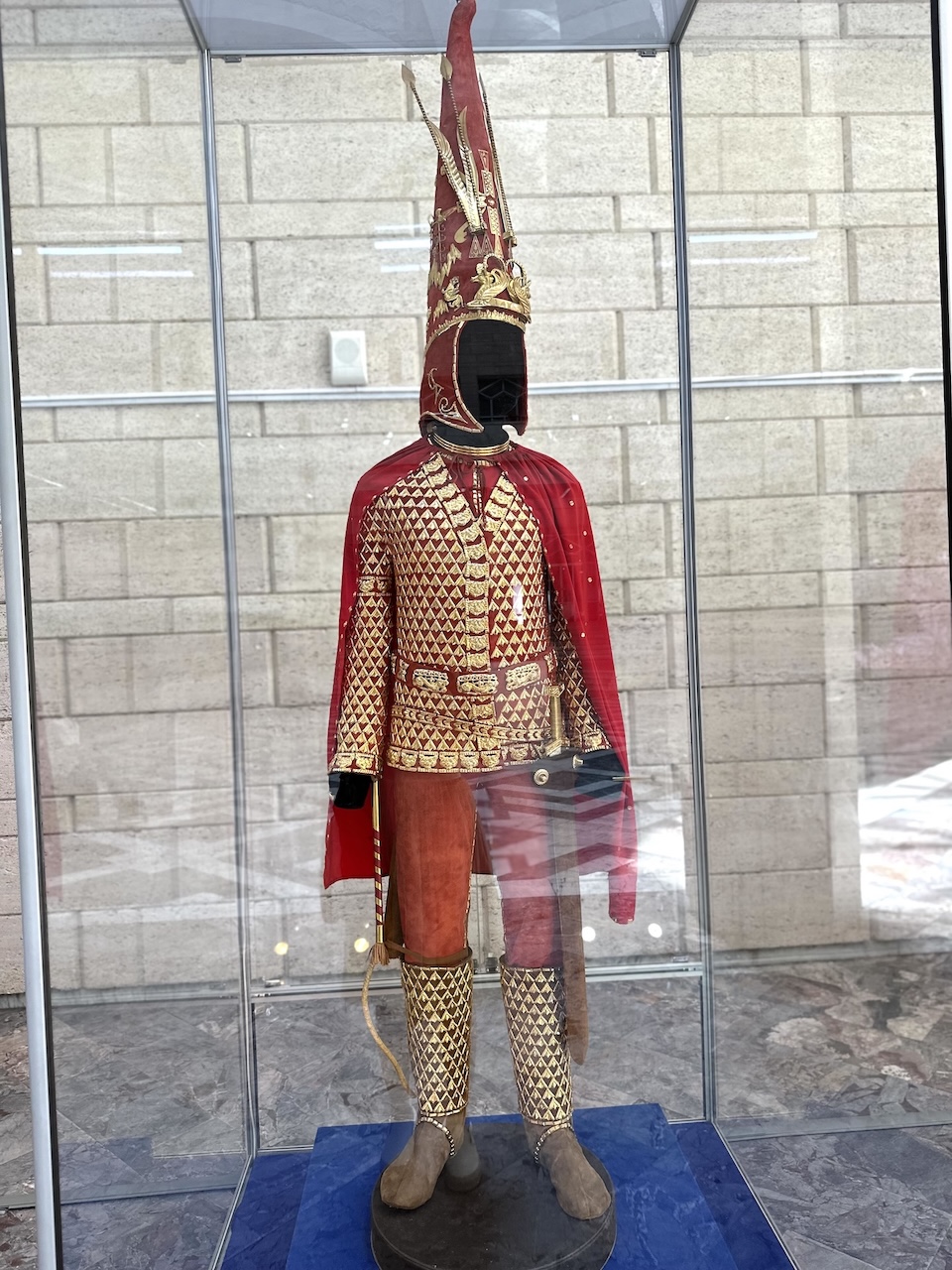
👑 The Golden Man of Kazakhstan
Location: Central State Museum of Kazakhstan, Almaty
Period: 5th century BCE (Saka period)
Discovery Site: Issyk Burial Mound, near Almaty
An Archaeological Discovery That Redefined National Identity
In 1969, archaeologists uncovered a young warrior clad in golden armor in the Issyk burial mound.
He was adorned with over 4,000 pieces of gold, each intricately decorated with animal motifs — running deer, soaring eagles, powerful horses — symbols of strength, freedom, and solar divinity.
He became known as the Golden Man, sometimes called the “Tutankhamun of the Steppe.”
Just as Tutankhamun represents ancient Egypt and the Terracotta Army represents imperial China, the Golden Man embodies the glory of Central Asia’s nomadic civilizations.
Warrior, Prince, or Tribal Leader?
Scholars believe the young man belonged to the Saka nobility, possibly a warrior or prince.
His attire features the iconic Animal Style Art found throughout the Eurasian Steppe — reflecting the deep spiritual connection between nomadic peoples and nature.
His tall golden headdress is crowned with four towering deer-antler motifs, symbolizing celestial power. In Kazakh mythology, the deer represents rebirth, courage, and the eternal cycle of the sun.
Today, a replica of the Golden Man stands atop the Independence Monument in Astana. His image appears on banknotes, stamps, and national emblems.
For Kazakhs, he is not merely a burial relic — he is an ancestral call:
“We come from the golden steppe, clothed in light, born for freedom.”
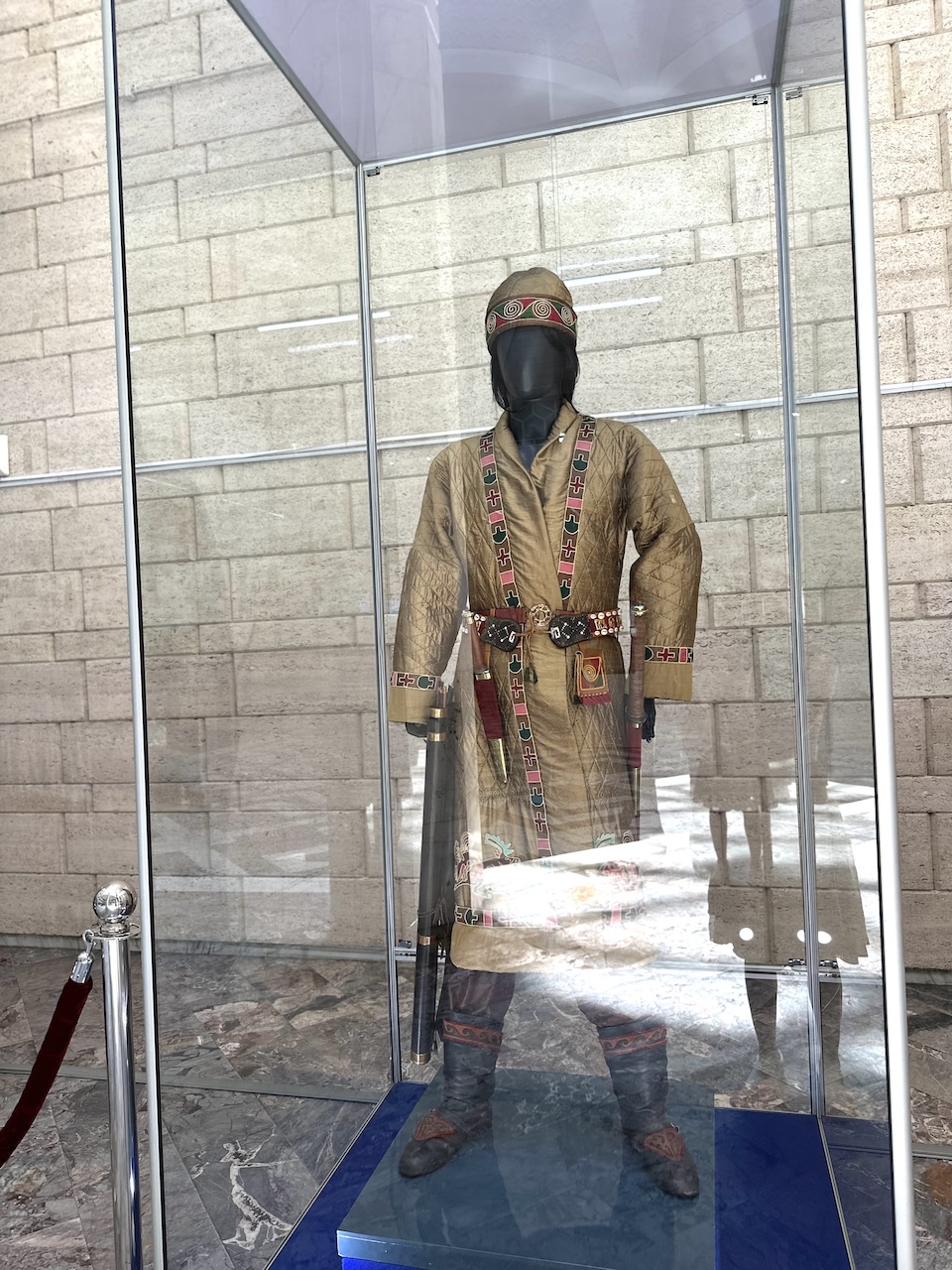
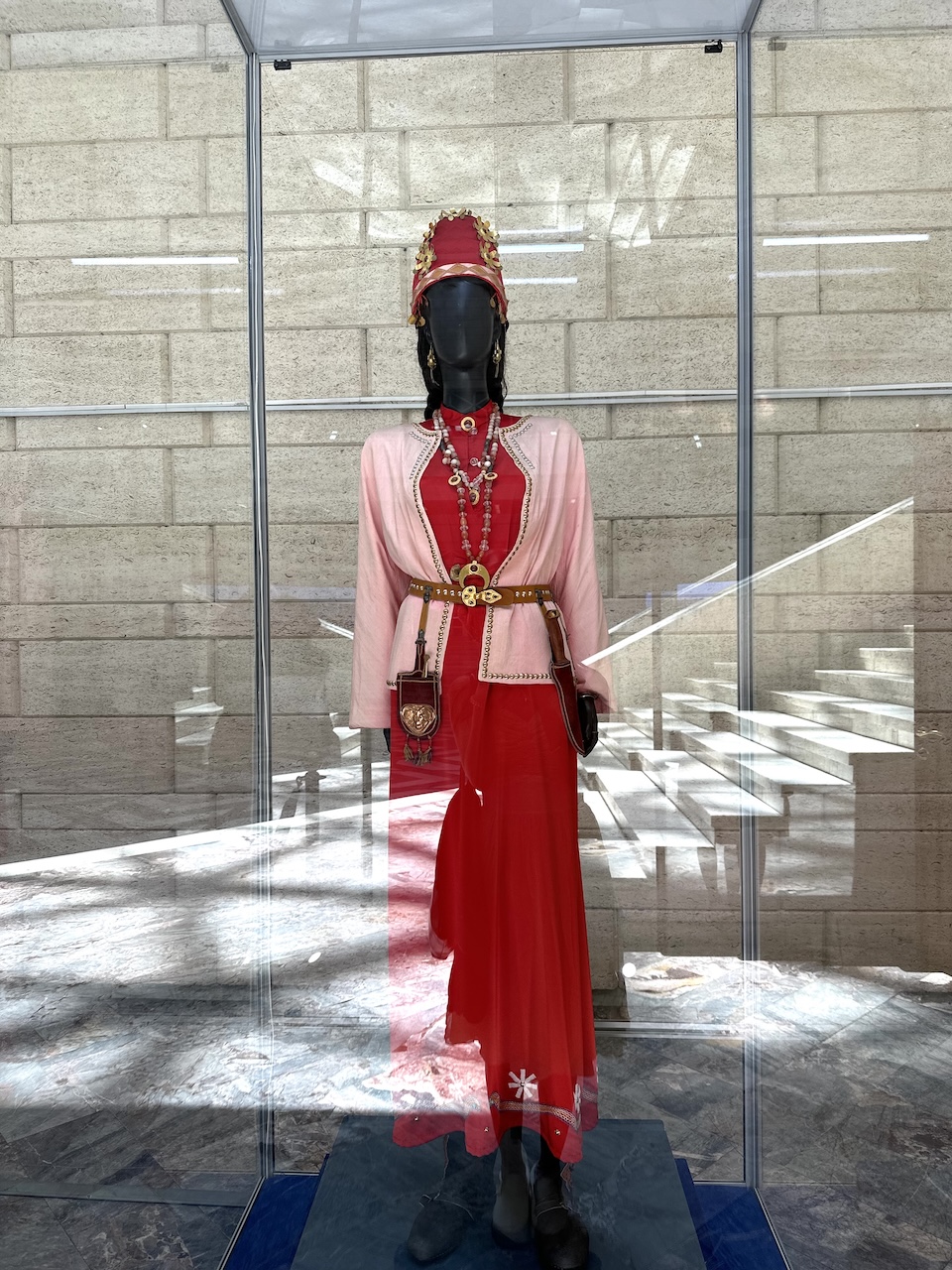
👨🚀 Saka Nobleman
The Saka nobleman is depicted wearing a red or golden-brown leather robe, richly decorated with gold plaques and intricate animal motifs — a hallmark of Eurasian Steppe artistry.
A sword or bow hangs at his side, symbolizing bravery, military strength, and authority. His attire reflects not only status, but also the warrior ethos that defined Saka society.
These garments demonstrate the advanced metalworking and decorative traditions that flourished across Central Asia between the 7th and 3rd centuries BCE.
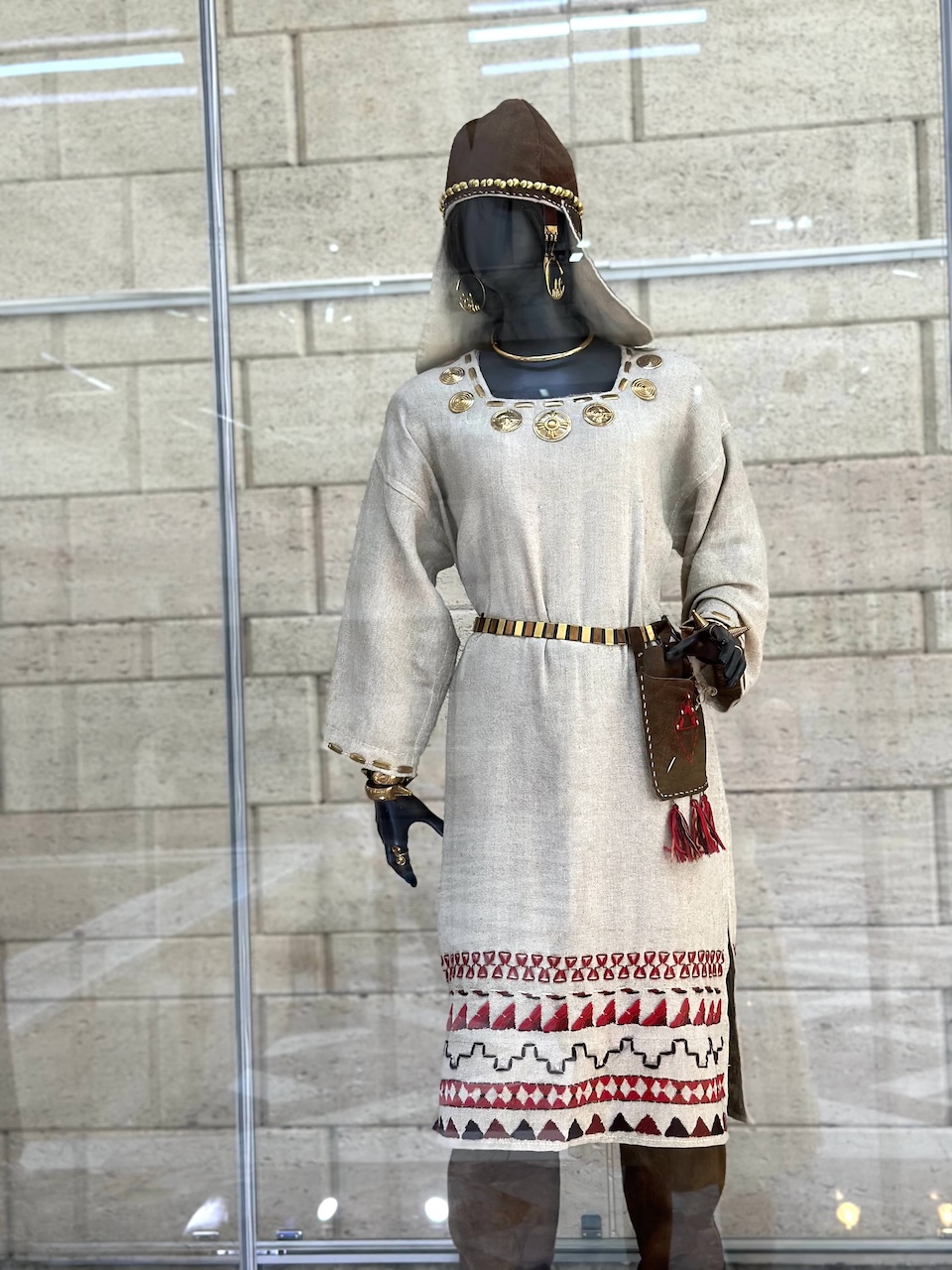
👩🦰 Saka Noblewoman or Priestess
The Saka noblewoman or priestess is shown in long ceremonial robes, adorned with headdresses, necklaces, and earrings.
Her elaborate appearance reflects the important social and possibly religious role women held in Saka society. Some scholars suggest that these reconstructions are inspired by female burials discovered in the Issyk Burial Mounds, near Almaty.
The presence of richly furnished female graves indicates that women in ancient steppe cultures may have possessed political influence, spiritual authority, or both — challenging common assumptions about gender roles in early nomadic societies.
🏹 Warrior and Nomad Figures
The museum also presents figures of steppe warriors and pastoral nomads, dressed in fur and leather garments suited to the harsh grassland climate.
Displayed alongside weapons, saddles, and daily tools, these reconstructions illustrate the nomadic lifestyle that defined much of Central Asia’s early history — a life centered on horseback riding, hunting, animal husbandry, and seasonal migration.
Together, these figures bring the Eurasian Steppe civilization to life, offering visitors a deeper understanding of how mobility, warfare, spirituality, and survival shaped one of the most influential yet often overlooked cultures in world history.
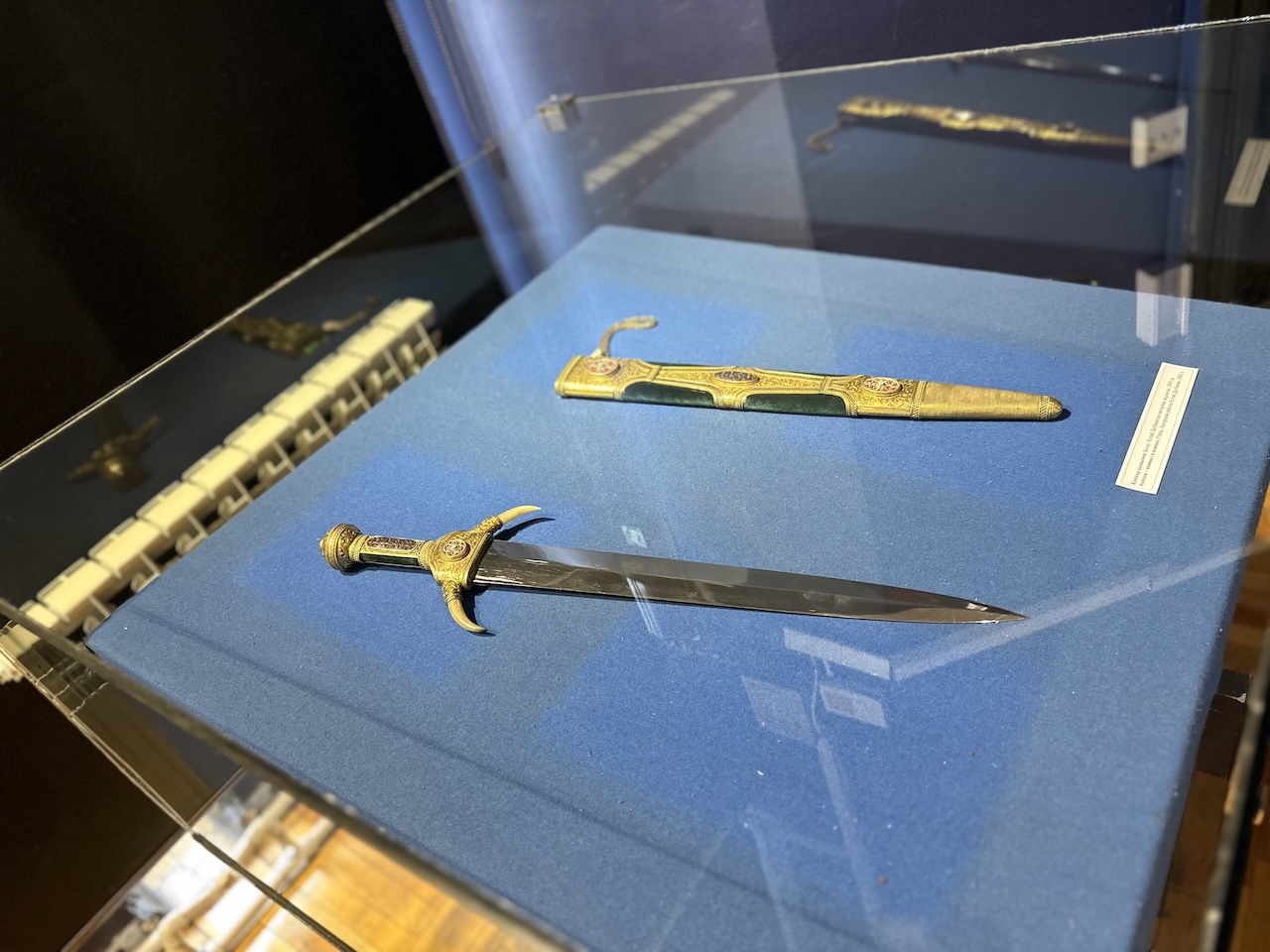
These exquisite ornate swords and daggers are among the most iconic artifacts housed in the Central State Museum of Kazakhstan. Primarily dating back to the Saka and Scythian periods (7th–3rd century BCE), they form the core collection of the museum’s Ancient Steppe Weapons and Metal Art exhibition, representing the pinnacle of early Eurasian nomadic craftsmanship.
These weapons are commonly known as:
-
Akinak (short sword)
-
Scythian Sword
-
Saka Dagger
They were the signature weapons of the ancient steppe nomads — used not only in warfare but also as powerful symbols of identity, honor, and authority.
Materials & Craftsmanship: Masterpieces of Steppe Metal Art
Crafted primarily from bronze and iron, these blades often feature elaborately decorated hilts and scabbards inlaid with:
-
Gold ornamentation
-
Silver plates
-
Turquoise
-
Agate
-
Amber
The scabbards are frequently engraved with:
-
Golden eagles, fierce tigers, and galloping horses — symbols of strength and spiritual freedom
-
Intricate motifs in the renowned Animal Style Art, the most representative artistic expression of Scythian–Saka civilization
Some sword hilts are adorned with:
-
Gold foil reliefs of warrior heads
-
Curved ram horns and soaring eagle patterns
-
Tribal totemic symbols
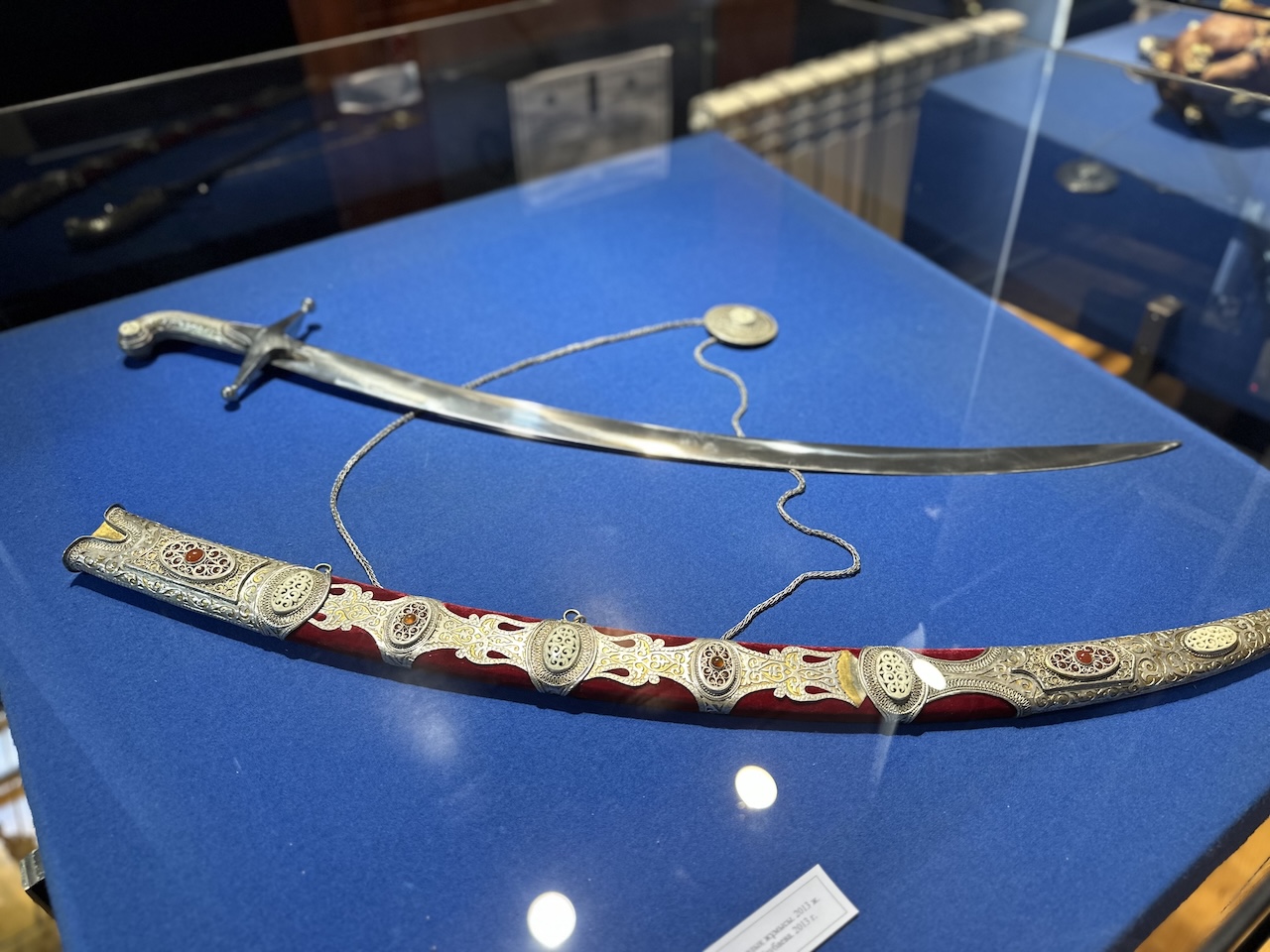
Symbolism: More Than Weapons
These were not ordinary combat tools. They served as:
-
Protective talismans carried by warriors
-
Emblems of status for nobles, tribal leaders, and priests
-
Sacred grave goods discovered in elite burial mounds, suggesting they were believed to guard the soul in the afterlife
Archaeological discoveries across Kazakhstan and the Eurasian steppe indicate that these swords held both military and spiritual significance within nomadic society.
The Spirit of the Eurasian Steppe Civilization
These Saka and Scythian swords embody the three core values of steppe civilization:
Power. Freedom. Honor.
They stand as silent witnesses to the migrations, conquests, and cultural exchanges that shaped the Eurasian continent. More than weapons, they symbolize an era defined by gold, swift horses, and legendary warriors — a golden age of nomadic civilization that continues to fascinate historians, archaeologists, and travelers alike.
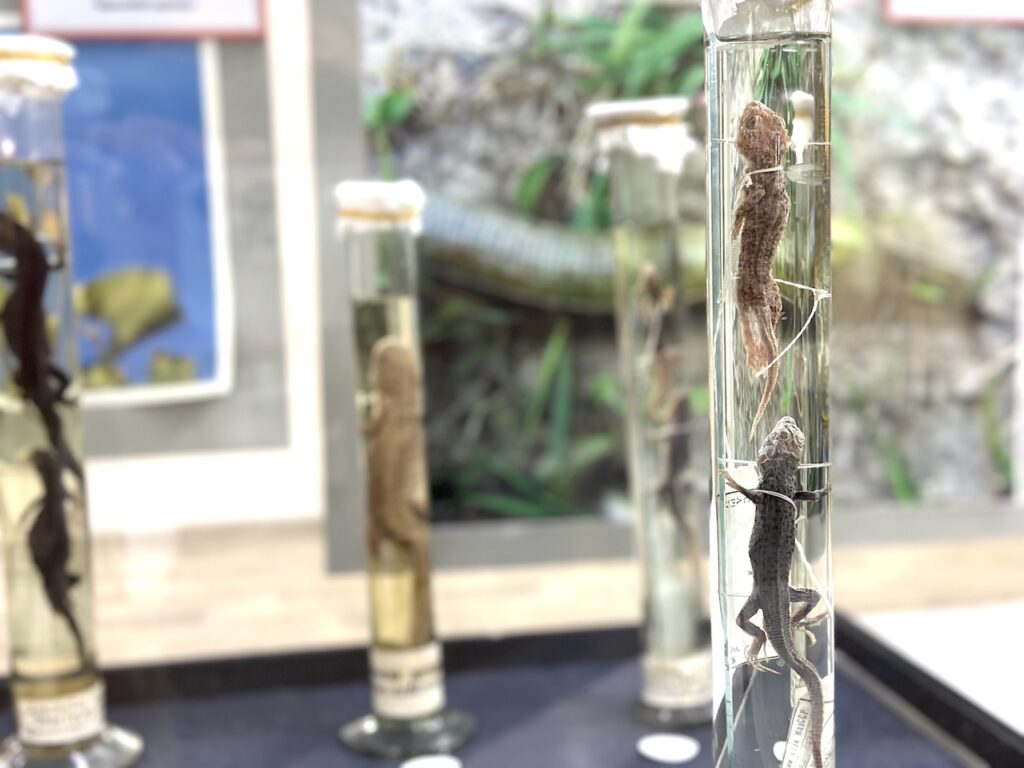
Wet Specimens: A Rare Scientific Exhibition in Central Asia
One of the museum’s most unique sections is its Wet Specimen collection, rare even by global museum standards — and particularly uncommon in Central Asia.
In a dimly lit corner of the zoological hall, rows of glass jars hold preserved fish, snakes, reptiles, and amphibians. Suspended in formaldehyde or ethanol, these specimens retain their original form and color for long-term scientific study.
Some date back decades, collected during Soviet-era expeditions.
Under the reflections of glass, these once-living creatures appear frozen in time. The exhibit not only reveals Kazakhstan’s biodiversity, but invites deeper reflection:
Science is not only about studying life — it is also about preserving the traces of its existence.
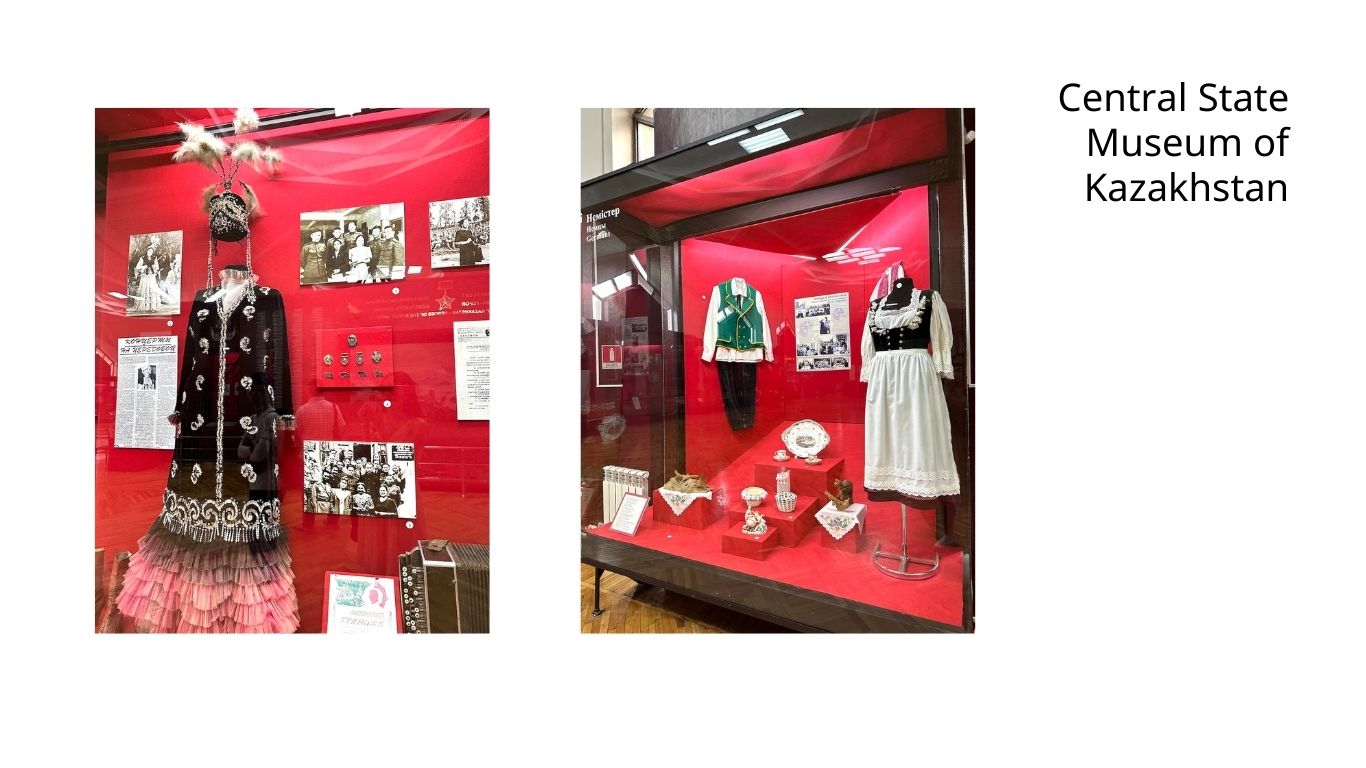
Located at the heart of the ancient Silk Road, Kazakhstan has for thousands of years served as a crossroads where Eastern and Western civilizations, nomadic traditions, and agricultural cultures converged. This unique geopolitical position shaped a rich and diverse cultural landscape — clearly reflected in the traditional costumes displayed in the nation’s museums.
The ethnic garments exhibited are not limited to Kazakh attire alone. Instead, they represent a broader spectrum of Central Asian and Eurasian heritage, including:
-
Turkic peoples such as the Kyrgyz, Uzbeks, and Turkmen
-
Neighboring Central Asian ethnic groups including Tajiks and Mongols
-
Cultural influences from Persian, Russian, and Han Chinese traditions
A Cultural Crossroads of the Silk Road
As a pivotal hub along the Silk Road trade routes, Kazakhstan became a dynamic meeting point for merchants, tribes, and empires. This long history of exchange is visible in textile techniques, embroidery patterns, headwear designs, and ornamental details found in traditional clothing.
Elements such as:
-
Intricate silk embroidery inspired by Persian artistry
-
Structured tailoring reflecting Russian imperial influence
-
Decorative motifs linked to Han Chinese textile traditions
-
Nomadic design features adapted for mobility and horseback life
All demonstrate how steppe culture absorbed and reinterpreted external influences while preserving its own nomadic identity.
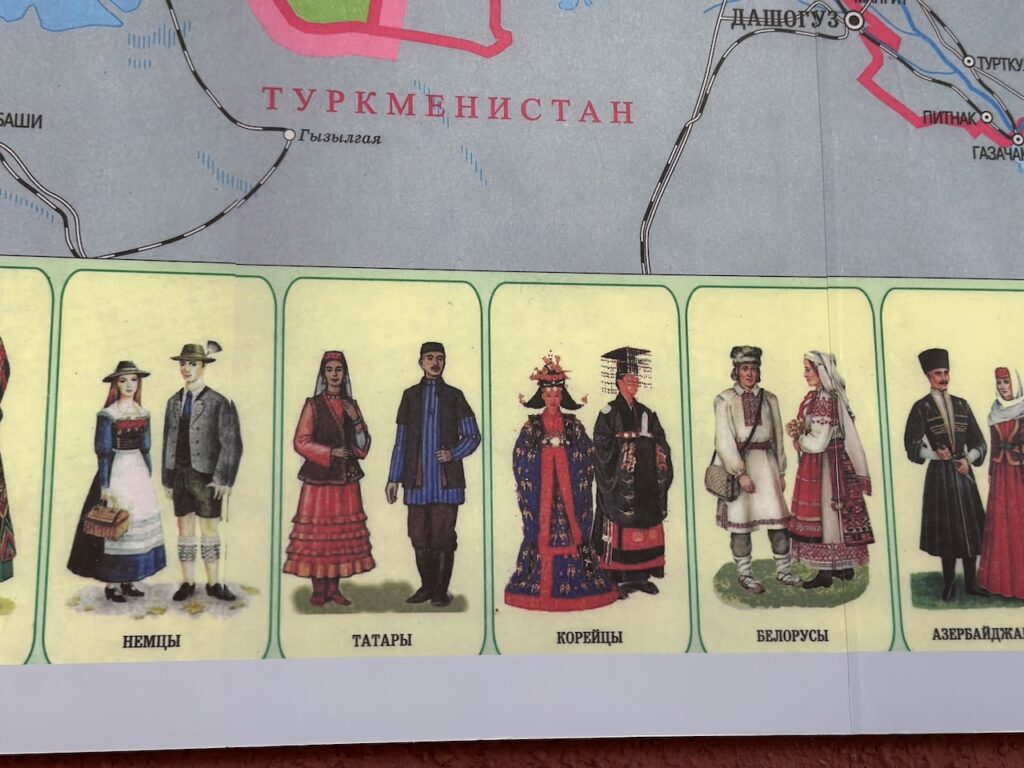
Nomadic Heritage Meets Eurasian Influence
These traditional costumes illustrate more than aesthetic diversity — they embody centuries of cultural interaction across Central Asia. The blending of Turkic, Persian, Slavic, and East Asian elements highlights Kazakhstan’s historical role as a bridge between civilizations.
For visitors exploring Kazakhstan’s museums, especially those interested in Silk Road history, Central Asian ethnic culture, and nomadic heritage, these garments offer a vivid visual narrative of Eurasia’s interconnected past.
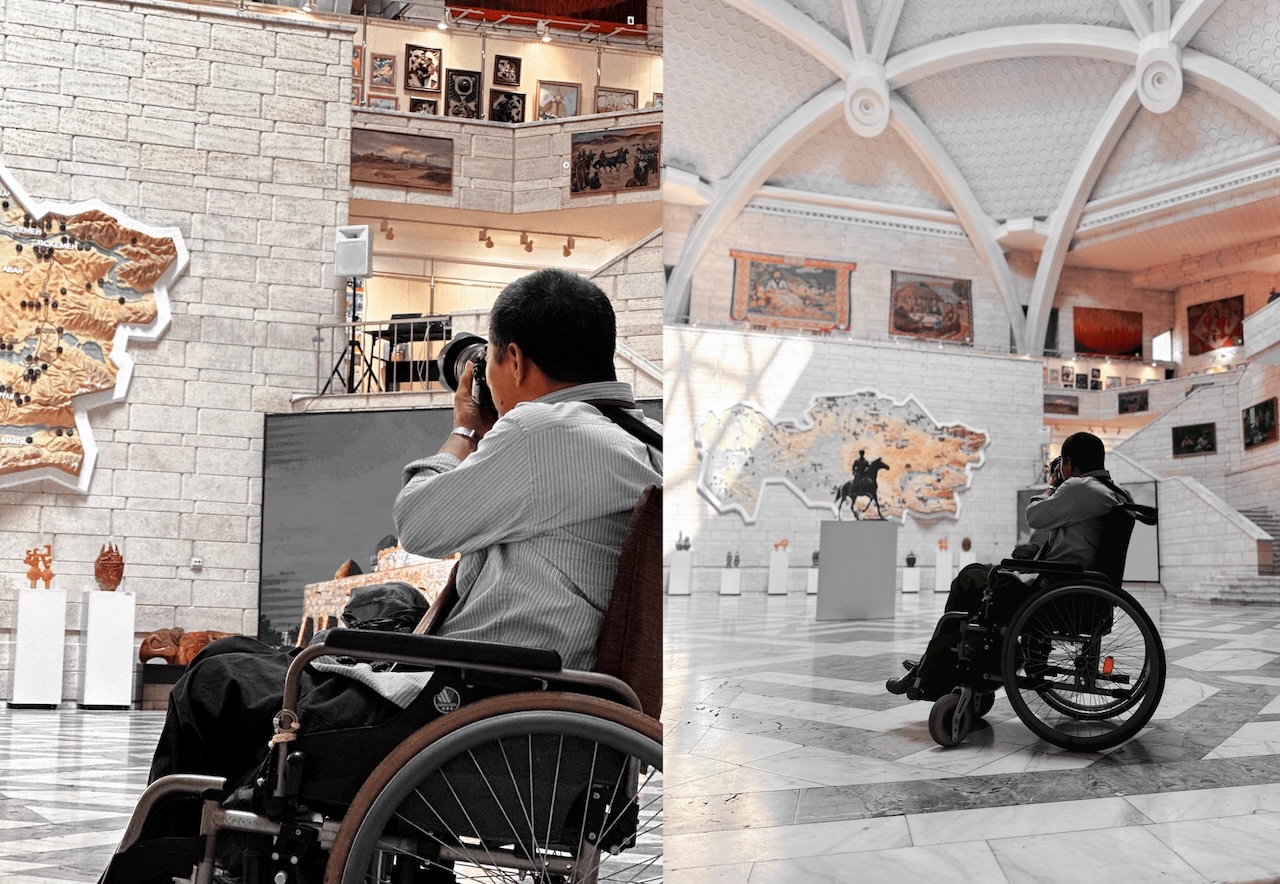
As I was about to leave, I saw a man in a wheelchair holding a camera, carefully composing his shots. Though physically limited, his gaze was steady — as if measuring the world’s width through his lens.
We often say, “Either the body or the soul must be on the road.” Yet we hesitate, postpone, wait for perfect conditions.
He showed me something different:
Travel is not about waiting for ideal circumstances — it is about choosing to move forward despite limitations.
A Living Cultural Space
The museum is not just a repository of history. It frequently hosts:
-
Temporary exhibitions
-
Academic lectures
-
Traditional festivals
-
Folk music and costume performances
Visitors can experience the living confidence of Kazakh culture firsthand.
Practical Information
📍 Address: Samal-1, Dostyk Avenue 44, Almaty
🕒 Opening Hours: 10:00–18:00 (Closed Mondays)
🎟 Tickets: Around 500 KZT (foreign visitors slightly higher; guided tours available)
🚇 Transport: About 15 minutes on foot from central Almaty or via Abay metro station