100 CASTLES TO VISIT
The Ark of Bukhara
One fortress, centuries of Bukhara’s history.
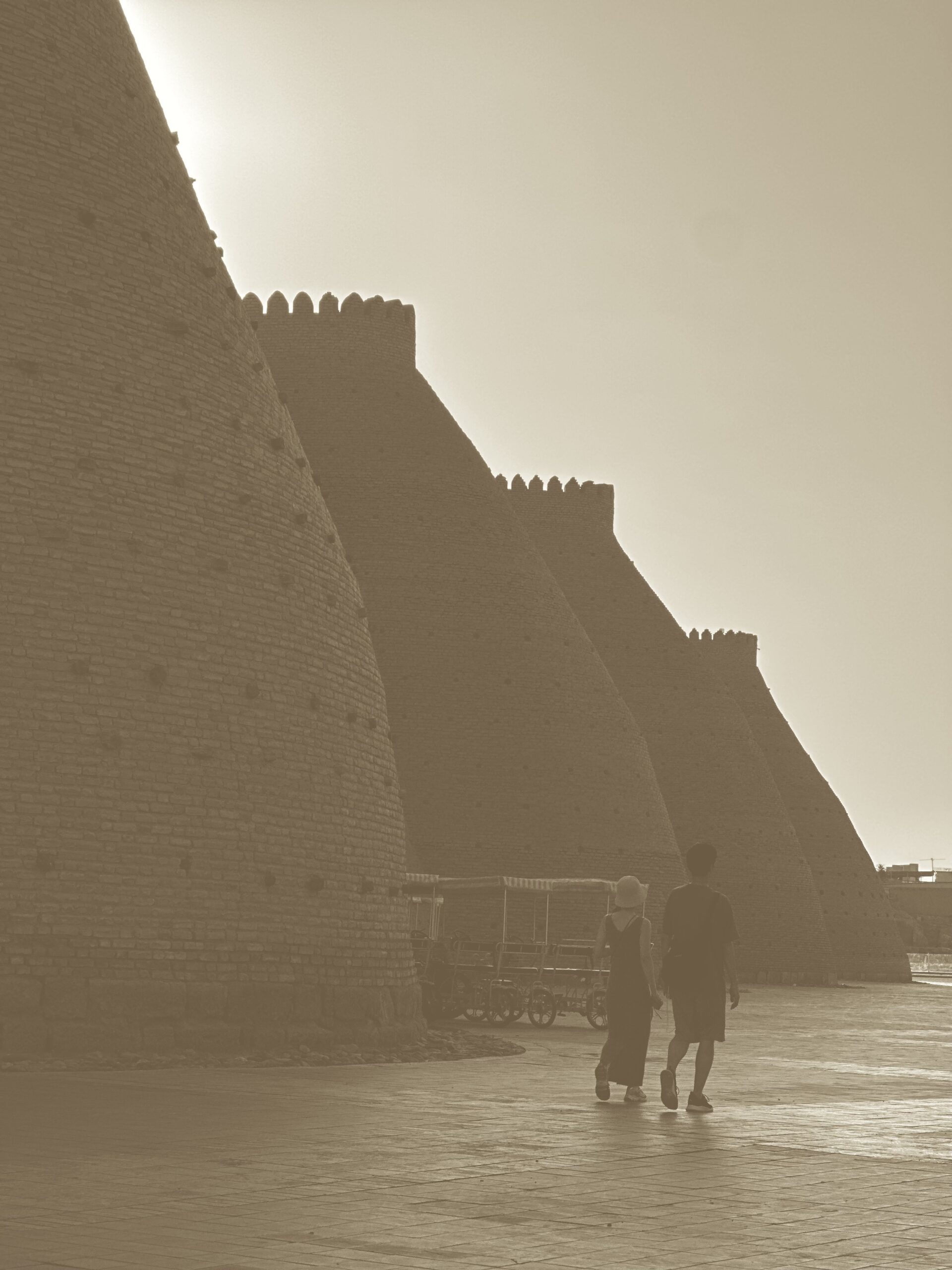
From a distance, the Ark of Bukhara looked nothing like the European castles I had pictured, with their pointed roofs, towers, and elaborate windows. Instead, it seemed to have grown straight out of the earth.
Its sandy walls rose high above us, immense and thick, their surfaces weathered by time. Standing at their foot and looking up, I felt very small.
A City Within a City
With a history stretching back more than 1,500 years, the Ark served for centuries as the residence and seat of government of Bukhara’s rulers.
The fortress we see today is the result of repeated expansion, destruction, and rebuilding under successive dynasties. It was never simply a palace completed at a single moment in history. It was a city within a city, continually reshaped by the people who ruled from it.
During the Emirate of Bukhara, the Ark was both a royal residence and the center of political and administrative power. The emir and his household lived within its walls, alongside officials, guards, and the people who kept the court running. Decisions made here reached far beyond the fortress.
Standing beneath those walls, I understood more clearly than ever why rulers built such formidable barriers.
They offered protection, but they also made power visible. For an ordinary person looking up from outside, the first impression must have been an authority that was difficult to approach—and harder still to challenge.
We walked slowly toward the entrance and into the fortress.
Today, parts of the Ark house museum exhibitions, turning spaces once occupied by the court into places where visitors can explore Bukhara’s past. War and time have taken away much of the original complex, but enough remains to imagine how busy this enclosed world must once have been.
The Throne Courtyard: Imagining the Emir’s Court
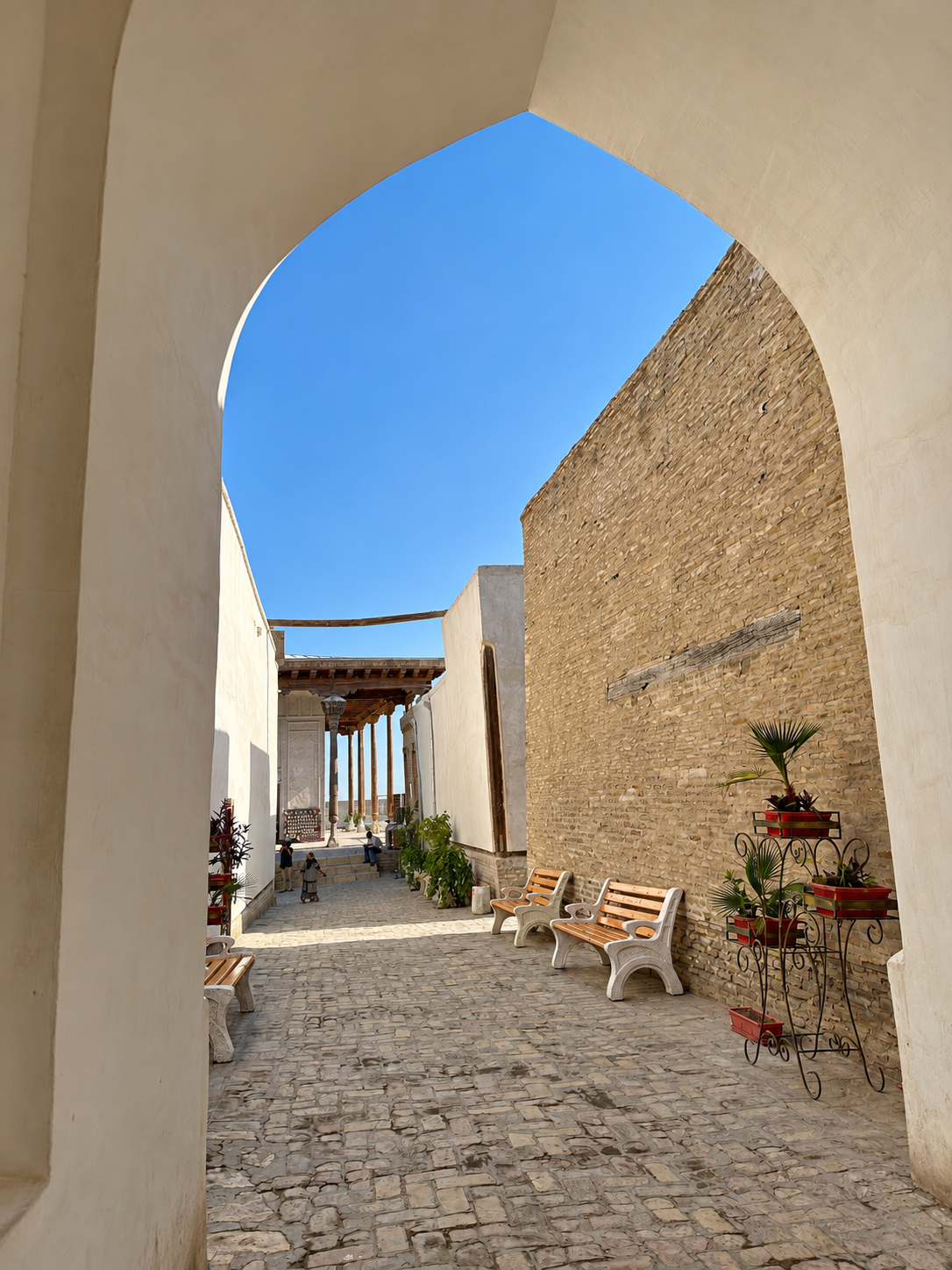
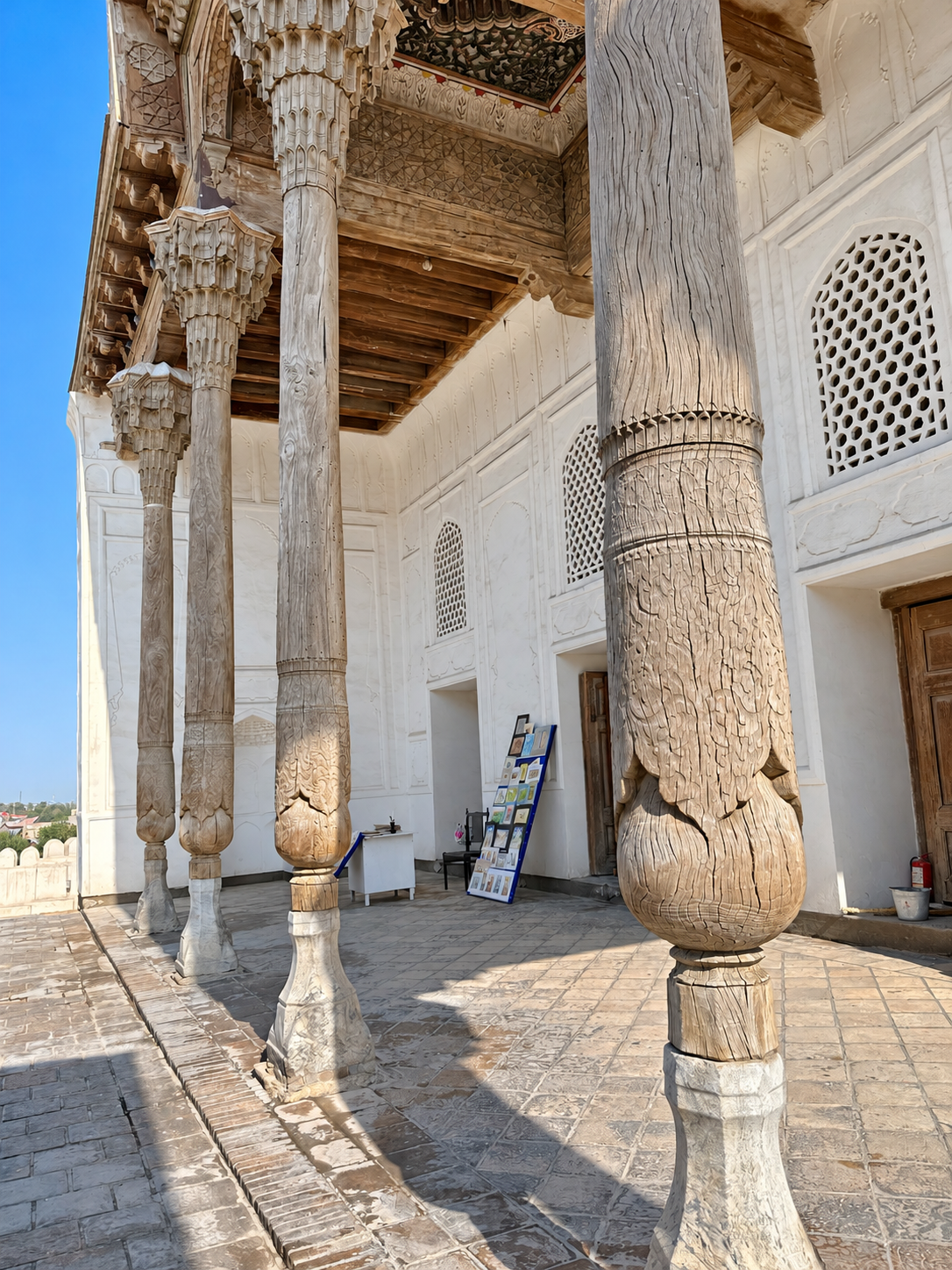
Of all the places inside the Ark, my favorite was the throne courtyard, often described as the Throne Hall.
More than the objects behind glass, the space itself drew me into the past.
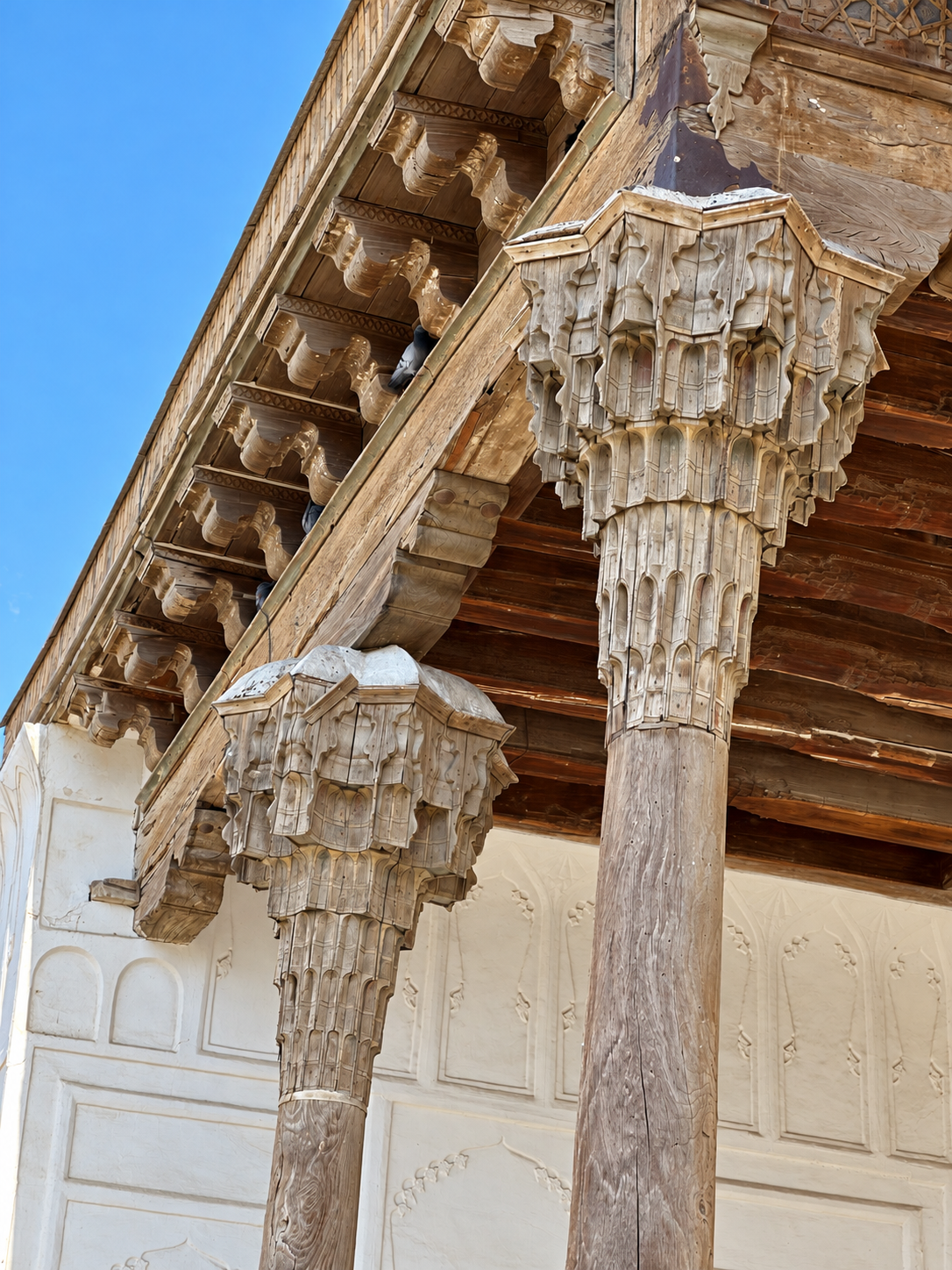
Slender wooden columns supported the roof of the shaded verandas. Their shafts and capitals carried intricate traditional carvings, while sunlight fell through the colonnade, laying alternating bands of light and shadow across the ground.
There was none of the overwhelming gilded splendor I might have expected from a royal palace. Its beauty felt quieter, more restrained.
In the days of the emirs, this was a setting for formal ceremonies and audiences with officials and foreign envoys. I imagined people arriving from different regions, bringing their own languages, gifts, and intentions. Some came on matters of trade, others on diplomatic business, and others with news from distant lands.
Today, visitors walk through with phones and cameras. The courtyard is quiet. Yet pause for a moment and imagine those earlier arrivals, and the space begins to feel much heavier with history.
I stood beneath the colonnade for a long time.
I found myself more interested in the old wooden columns than in the artifacts displayed indoors. An object can be moved and placed in a museum almost anywhere. These columns and this courtyard belong to this place.
Who had walked between them? Who had arrived with confidence, and who had left disappointed? What negotiations had they witnessed? What changes of power had unfolded beneath their roof?
Most of those stories are beyond our reach.
“The fortress itself is its most precious exhibit.”
Court Life and Bukhara’s Gold Embroidery
Another exhibition explored life at the emir’s court, with traditional clothing, embroidered robes, furniture, household utensils, and objects associated with the royal household.
Sometimes I find these everyday things more compelling than accounts of wars and changing dynasties. They turn history from a sequence of dates and names into the lives of people who once woke up, got dressed, ate meals, and went about their day.
Bukhara’s traditional gold embroidery particularly caught my attention.
The city was an important center of this craft, known for elaborate patterns stitched in gold thread onto velvet and other fabrics. Such work adorned ceremonial robes and clothing worn by the ruling elite.
Up close, what first appeared to be a continuous golden design resolved into an extraordinary accumulation of tiny, careful stitches. I tried to imagine the time and patience behind a single richly decorated robe.
Those clothes also made me think about how we remember a dynasty.
We tend to describe it through wars, borders, and the names of its rulers. But the people who lived through it also cared about what to wear, what to eat, what furniture to place in their homes, and which outfit was worthy of an important occasion.
History lives in those details, too.
Weapons, Armor, and the People Who Carried Them
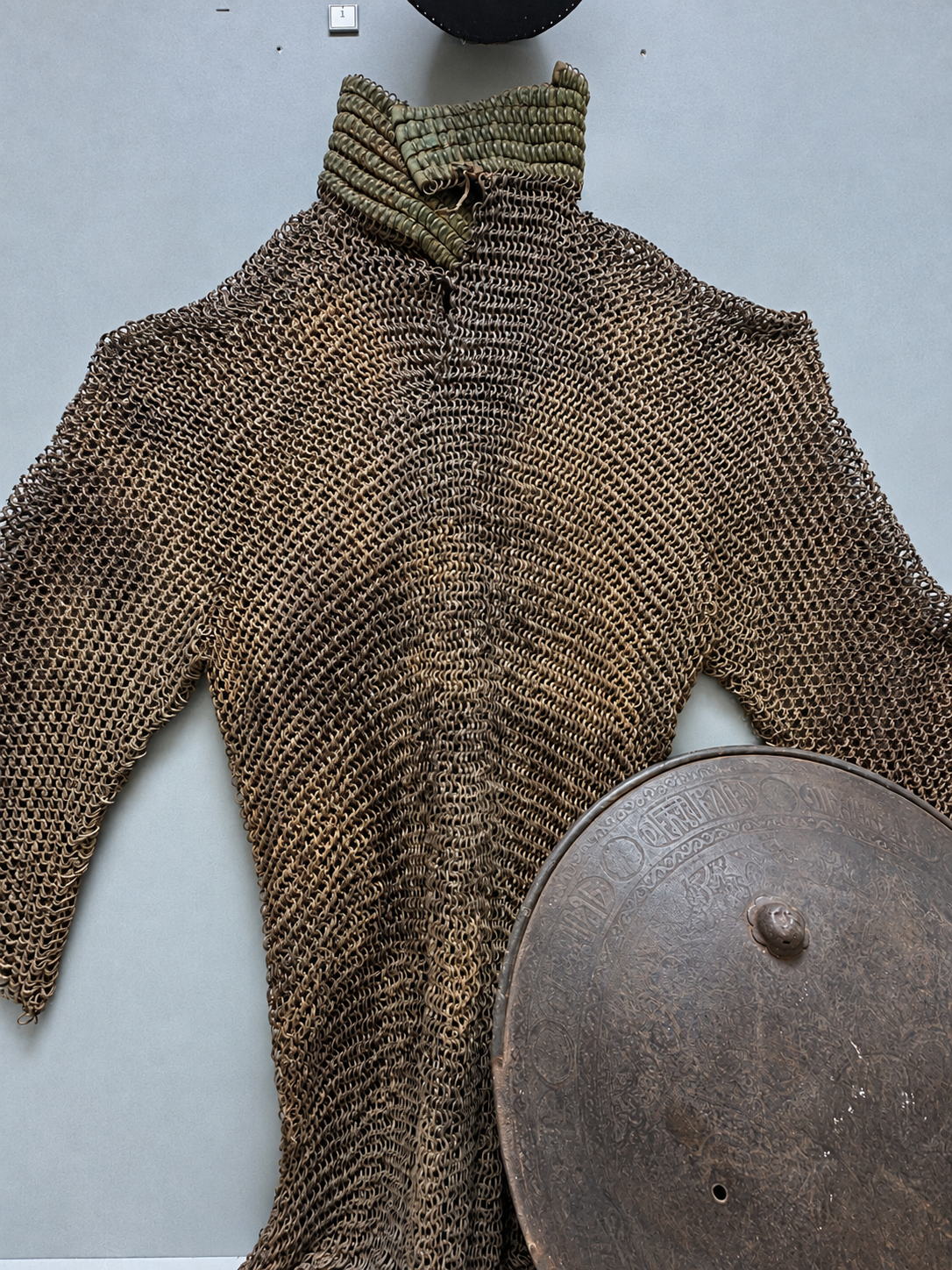
Further inside, displays of swords, daggers, shields, firearms, and cavalry equipment traced changes in military life and technology.
Bukhara stood at an important crossroads in Eurasia, shaped over time by Persian, Turkic, and later Russian influences. The movement of ideas and techniques left its mark on weapons, clothing, and craftsmanship alike.
Someone with a serious interest in military history could probably spend hours studying these collections.
As an ordinary visitor, I found myself asking simpler questions. Who had held these weapons? What had they feared? What kind of world had they lived in?
Behind each piece of metal was a person whose life I could only imagine.
Bukhara and the Silk Road
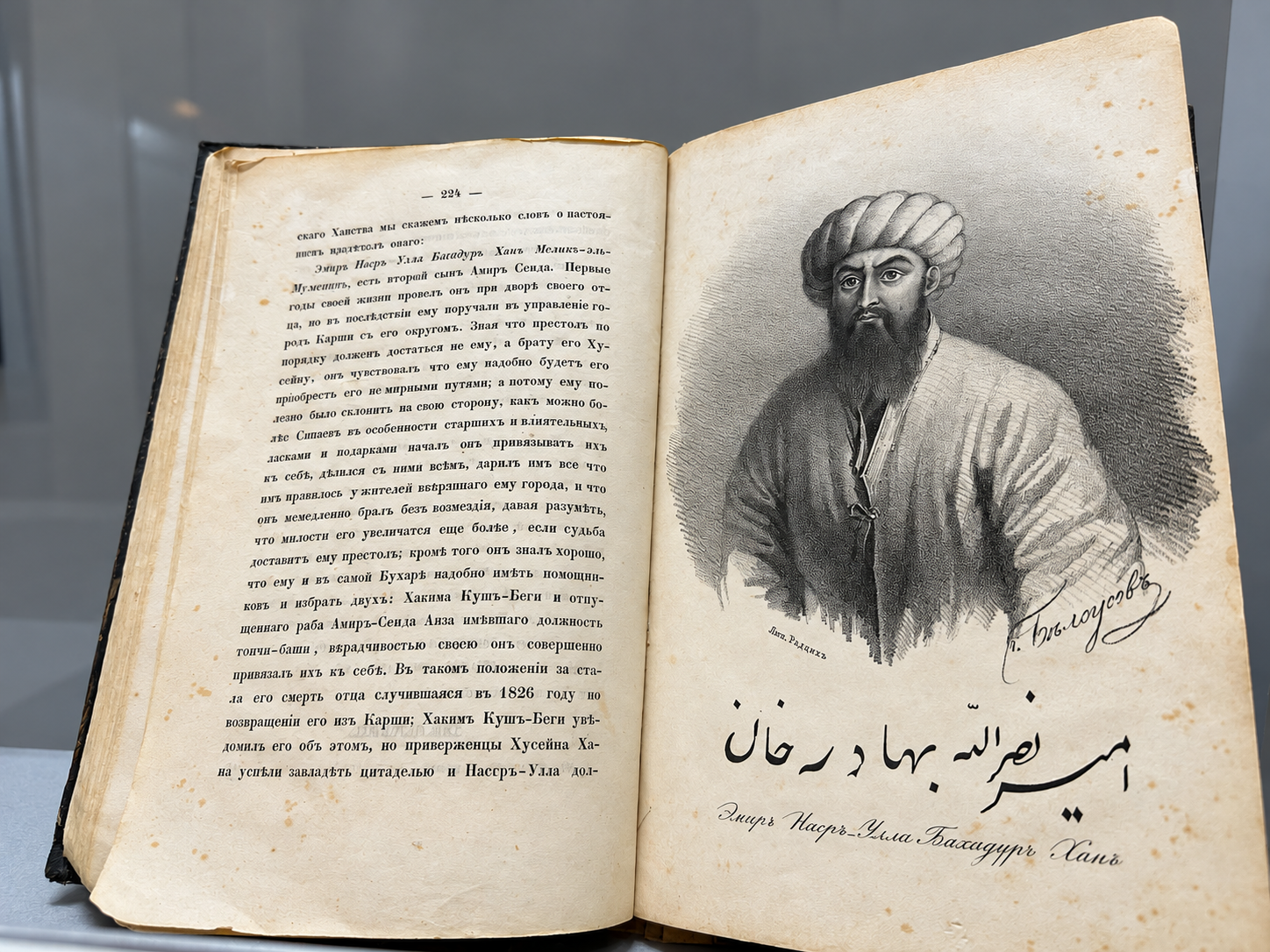
The displays relating to coins and trade helped me place Bukhara back on the wider map of Eurasia.
Today, a plane or train can carry us across a country in a matter of hours. During the flourishing centuries of the Silk Road, goods traveling from the distant East might have spent months—or longer—passing from one merchant to another before reaching Bukhara.
Silk, spices, furs, carpets, and handmade goods moved along these routes. So did languages, religions, artistic traditions, technologies, and stories.
Bukhara was never simply an isolated old city at the edge of the desert. It was a meeting place.
Caravans arrived from different directions, traded, and continued onward. Some travelers stayed for a few days. Others remained for years. Some made the city their home.
The culture we encounter in Bukhara today carries the traces of those countless meetings.
The Fortress Itself Is the Greatest Exhibit
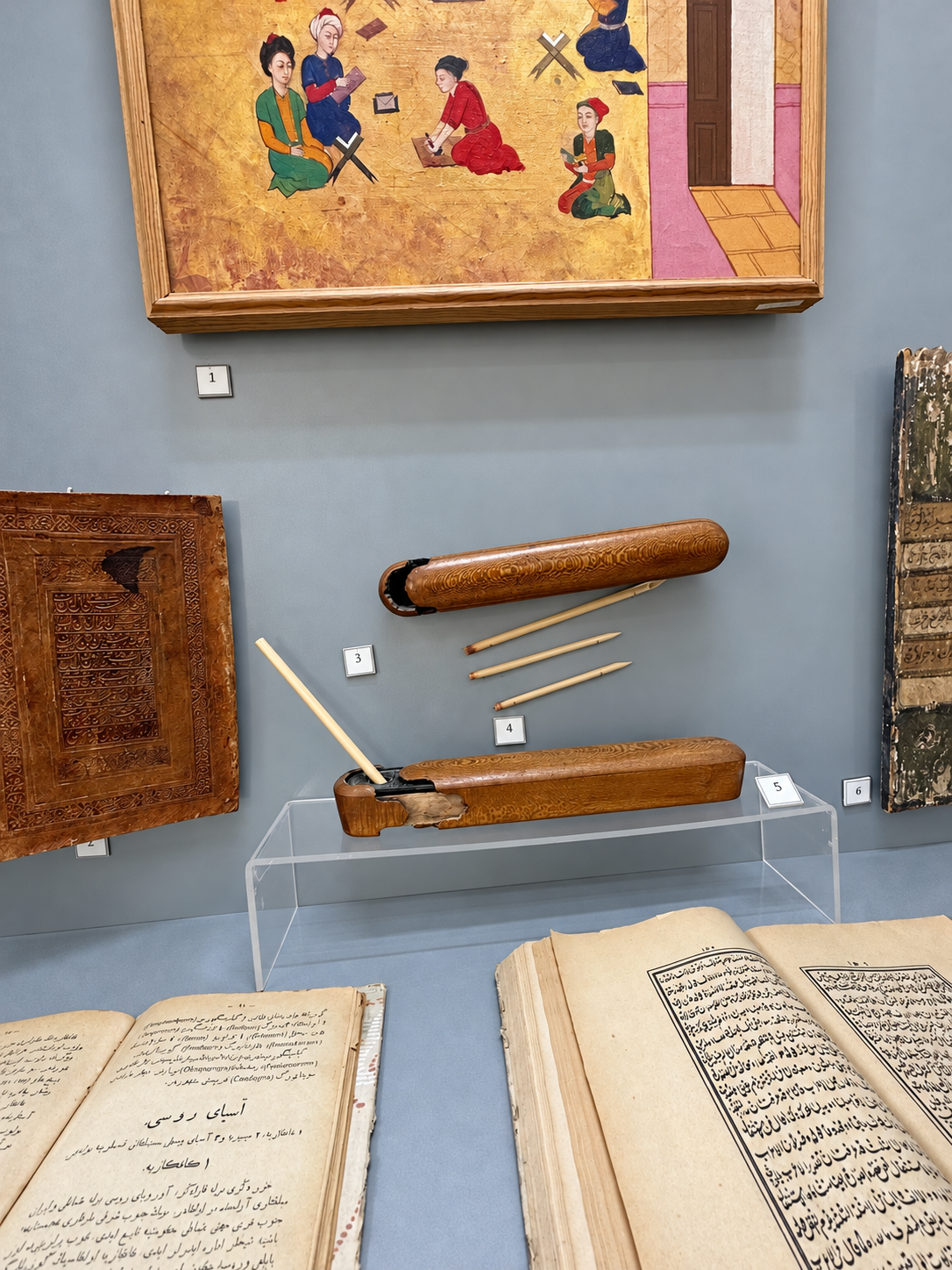
If someone asked me to choose the Ark’s greatest treasure, I would struggle to name a single object behind glass.
For me, the fortress itself is its most precious exhibit.
The heavy walls, monumental entrance, throne courtyard, surviving palace spaces, and weathered wooden columns form something that could never fit inside a display case.
You have to stand beneath the walls and feel their scale. You have to step into the courtyard and watch the sunlight fall between the columns. Only then does the place begin to reveal what it once meant.
This was a center of concentrated power.
Some people rose to authority here; others slipped out of history. Envoys arrived from far away bearing gifts, while rulers made decisions that would shape the future of a city or a state.
Eventually, the dynasties disappeared. Rulers who had once seemed untouchable became names in history books. Now, ordinary visitors can buy a ticket and walk through places where those rulers once lived and governed.
I find that reversal fascinating.
We like to believe that we possess power, wealth, and land. But across a long enough stretch of time, none of it can be taken with us.
What remains may be a building, a piece of clothing, a handful of coins, or a few lines on a museum label.
Beneath the Same Roof
Before leaving the throne courtyard, I looked back once more at the wooden columns.
I still preferred them to the objects behind glass.
They stood quietly, carrying the marks of one age after another. The envoys, merchants, rulers, and guards who once passed through had long since vanished.
And centuries later, here we were, arriving from different corners of the world and passing beneath the same roof.